Remote Work Isn’t Dead: Why Flexibility is a Strategic Advantage for Business Leaders
Dec 08, 2025
#FlexibleWork #HybridWork #RemoteWork #FutureOfWork #LeadershipDevelopment #WorkplaceCulture #EmployeeEngagement #BusinessStrategy #Productivity #EquityInTheWorkplace #InclusiveLeadership #WomenInBusiness #DiversityAndInclusion #TalentRetention #UKBusiness #CIPD
By WCorp Editorial Team
In today's fast-evolving world of work, the debate over remote work is anything but settled. Some organisations are pushing for a full return to the office while others remain committed to hybrid or remote-first models. Remote work has changed the way we think about business. Some UK organisations are insisting employees return to the office, but flexibility remains a strategic choice that drives productivity, innovation and strong leadership.
Productivity and Profit: Why Flexibility Works
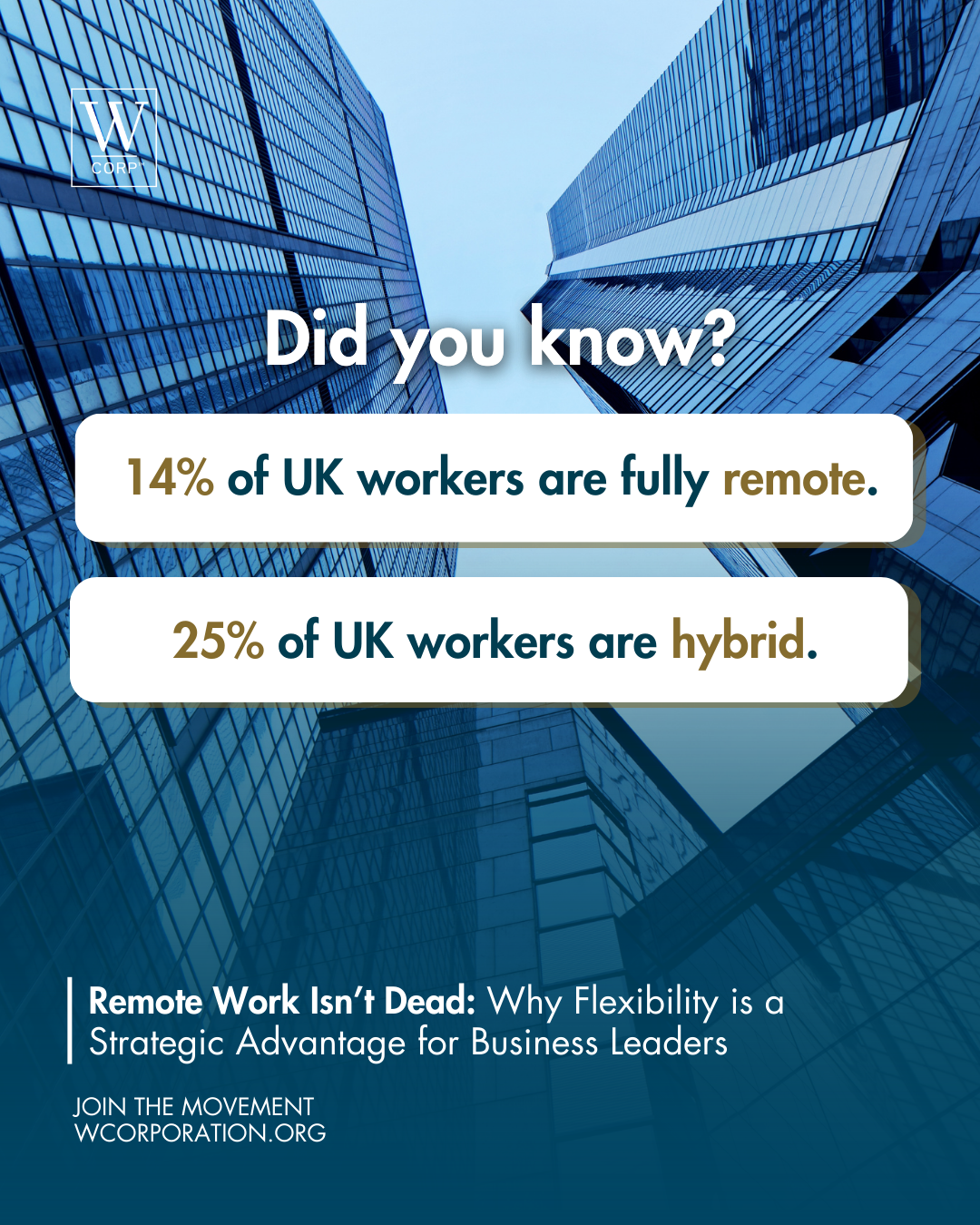
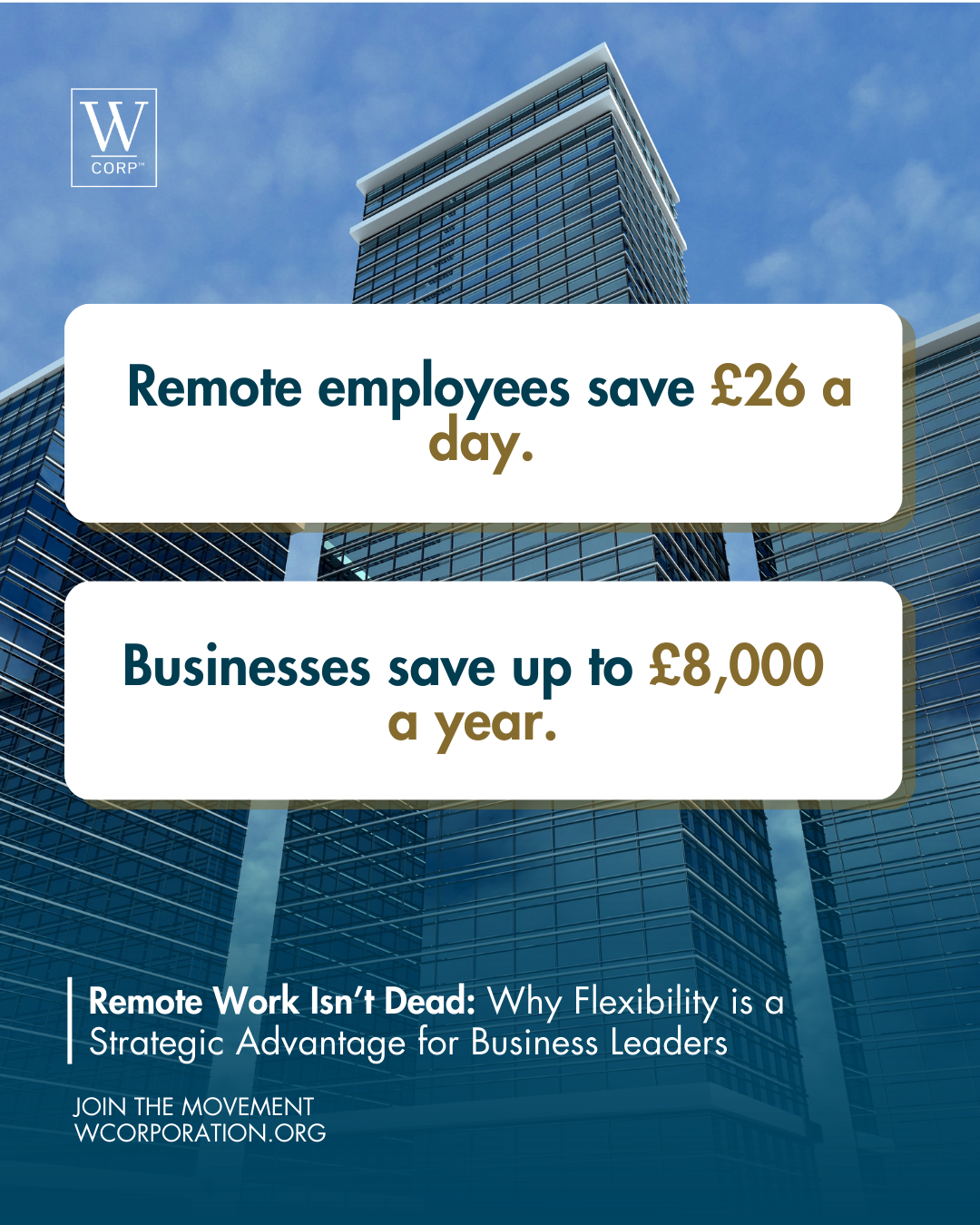
Flexible working delivers real, measurable value. In the UK, 14 percent of workers operate fully remotely, and 25 percent follow a hybrid model, according to StandOut CV. Their research also shows that remote employees save, on average, £26 per day on commuting and lunch costs, and gain 5 hours per week by cutting out their commute, giving them space to focus and perform at their best.
Employers benefit too - hybrid and remote models can save up to £8,000 per employee each year, according to the same StandOut CV research. Reduced office costs, stronger engagement and improved retention all help businesses thrive.
A deeper look shows how important flexibility is to people. StandOut CV reports that 58 percent of workers would decline a role requiring full-time office attendance, and 78 percent say their work-life balance improved when working remotely. People perform better when they are trusted and empowered.
Innovation and Leadership: Trust Drives Higher Performance
Remote work redefines leadership. Innovation thrives where people feel trusted, valued, and supported. Flexibility allows teams to think deeply, experiment boldly, and approach problems creatively.
Research from the Hybrid Work Commission shows that strategic in-person time strengthens collaboration and culture, while remote days enhance focus and productivity. Leaders who manage by outcomes, not hours, unlock potential and attract top performers.
The CIPD highlights that flexible models improve autonomy, build engagement and create agile organisations. Indeed, they state 41% of employers believe that an increase in home/hybrid working has led to increased productivity/efficiency in their organisation. In today’s landscape, trust itself becomes a competitive advantage. Leaders who design distributed work intentionally, see faster problem solving, stronger collaboration, and a culture that fuels creativity.
Challenges: Flexibility Requires Intentional Design
For all its advantages, remote work is not without challenges. It delivers enormous value, but only when supported by clear structure and intentional design. Employees can struggle with isolation, blurred boundaries, or communication gaps. Because of this, ExecCapital notes that organisations must balance cost savings with investments in technology, management practices and cybersecurity.
Not all roles can or should go fully remote. The ONS shows that hybrid work is more accessible to higher-paid and knowledge-based roles. However, thoughtful flexible policies open doors for more people and create a fairer workplace.
In the UK, all employees now have the right to request flexible working from day one. Employers must consider requests reasonably and can only refuse for specific business reasons, reinforcing that flexibility is part of strong business practice (Stribe 2025).
Choice Is a Strategic Lever for Leaders
The most effective organisations build flexibility around business needs and job realities.
- Role-based flexibility: Tailor remote policy by role. For example, some client-facing or operational positions may require more office presence, while many knowledge roles suit hybrid or remote work.
- Hybrid as standard practice: For many organisations, hybrid is the sweet spot. It gives people the best of both worlds - autonomy and connection.
- Intentional in-person connection: Even remote-first companies benefit from gathering teams periodically in the office. It reinforces culture and helps build trust.
- Leadership capability building: Leaders must adapt, managing performance, building trust and enabling collaboration across locations and time zones.
The ROI of Equity, Innovation, and Leadership
At WCorp we see flexible work as a lever for stronger business outcomes.
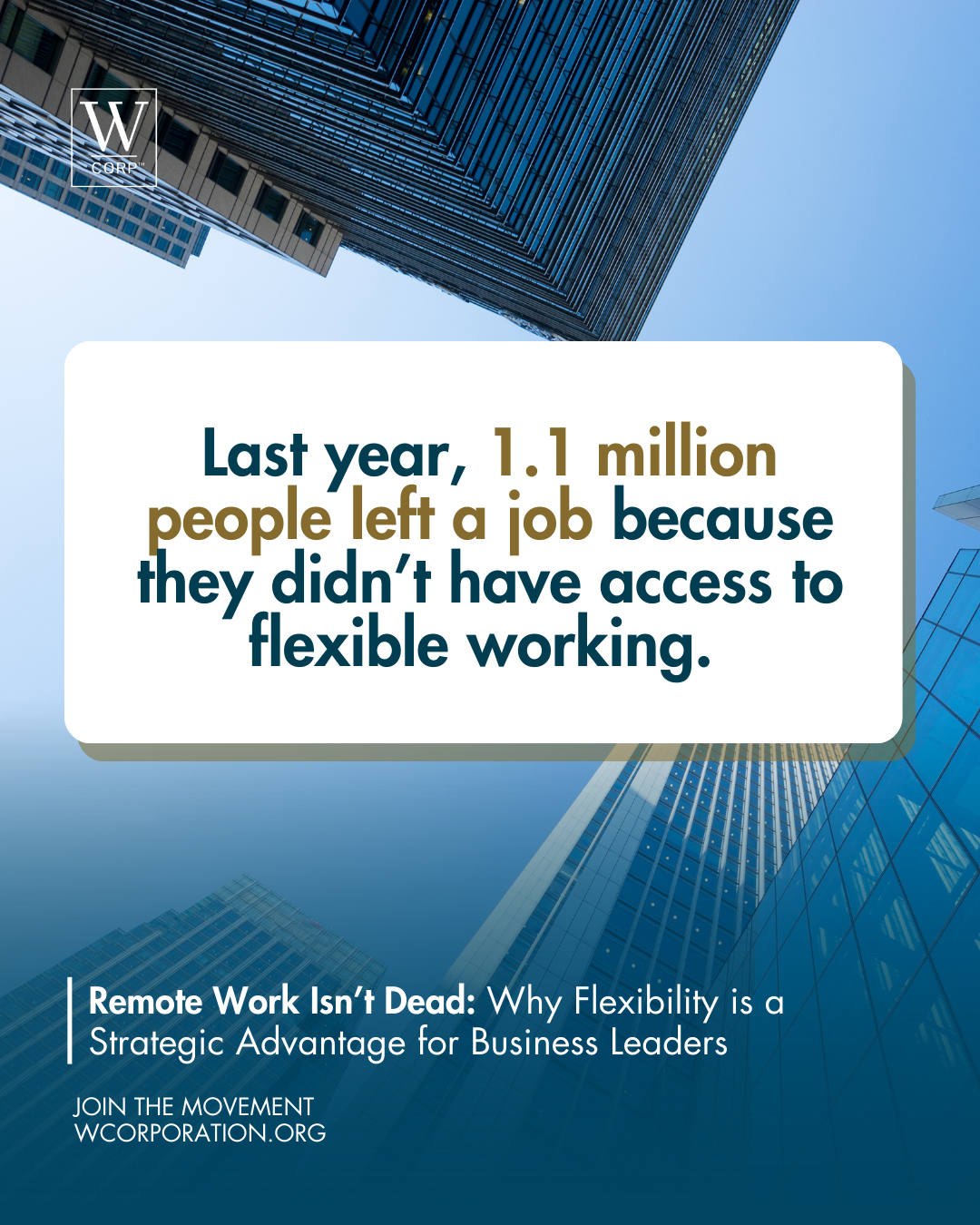
- Equity: Flexible work opens up opportunity. It helps people who can’t - or don’t want to - be in the office full time: parents, caregivers, those with health needs or people living outside city centres. The CIPD found that around 1.1 million people left a job last year because they didn’t have access to flexible working, showing how deeply flexibility affects commitment and retention.
- Innovation: Teams that feel trusted and empowered often produce more creative work because they can think freely, test new ideas, learn from them and grow.
- Leadership: Leaders who embrace flexibility demonstrate vision. They prioritise long-term value, not just presenteeism. They build cultures where performance is measured by output, not by seat time.
Conclusion
Remote working is here to stay, and it is shaping the future of UK business. Organisations that embrace flexibility see higher productivity, lower costs, more innovation and stronger leadership. Flexible work supports retention - when it fits around people’s lives, they stay longer, contribute more, and grow with the organisation. Leaders who build choice into how people work unlock resilient, creative and motivated teams. When people feel trusted, they take ownership, collaborate openly and help create a stronger workplace culture. The future belongs to organisations that trust their people - because when people thrive, business thrives too.