Mental Health at Work (Done Properly): When Culture Carries the Weight
Feb 16, 2026
#MentalHealthAtWork #WorkplaceWellbeing #Leadership #InclusiveWorkplace #WomenAtWork #EmployeeExperience #WorkCulture #PsychologicalSafety #FlexibleWork #GenderEquity #BurnoutPrevention #SustainablePerformance #WorkplaceStress
By WCorp Editorial Team
Stress at work rarely arrives with a warning label. It looks like staying late "just this week," skipping lunch to clear emails, waking at 3am replaying a difficult conversation. Small pressures build quietly until exhaustion becomes the baseline, anxiety feels normal, and burnout arrives as a predictable consequence of how work is designed.
In the UK, work-related stress, depression and anxiety affected 964,000 workers in 2024/25, representing over half of all work-related ill health. The numbers remain high despite unprecedented investment in mental health support. Organisations spend billions on counselling services, mindfulness apps, resilience training and wellbeing programmes.
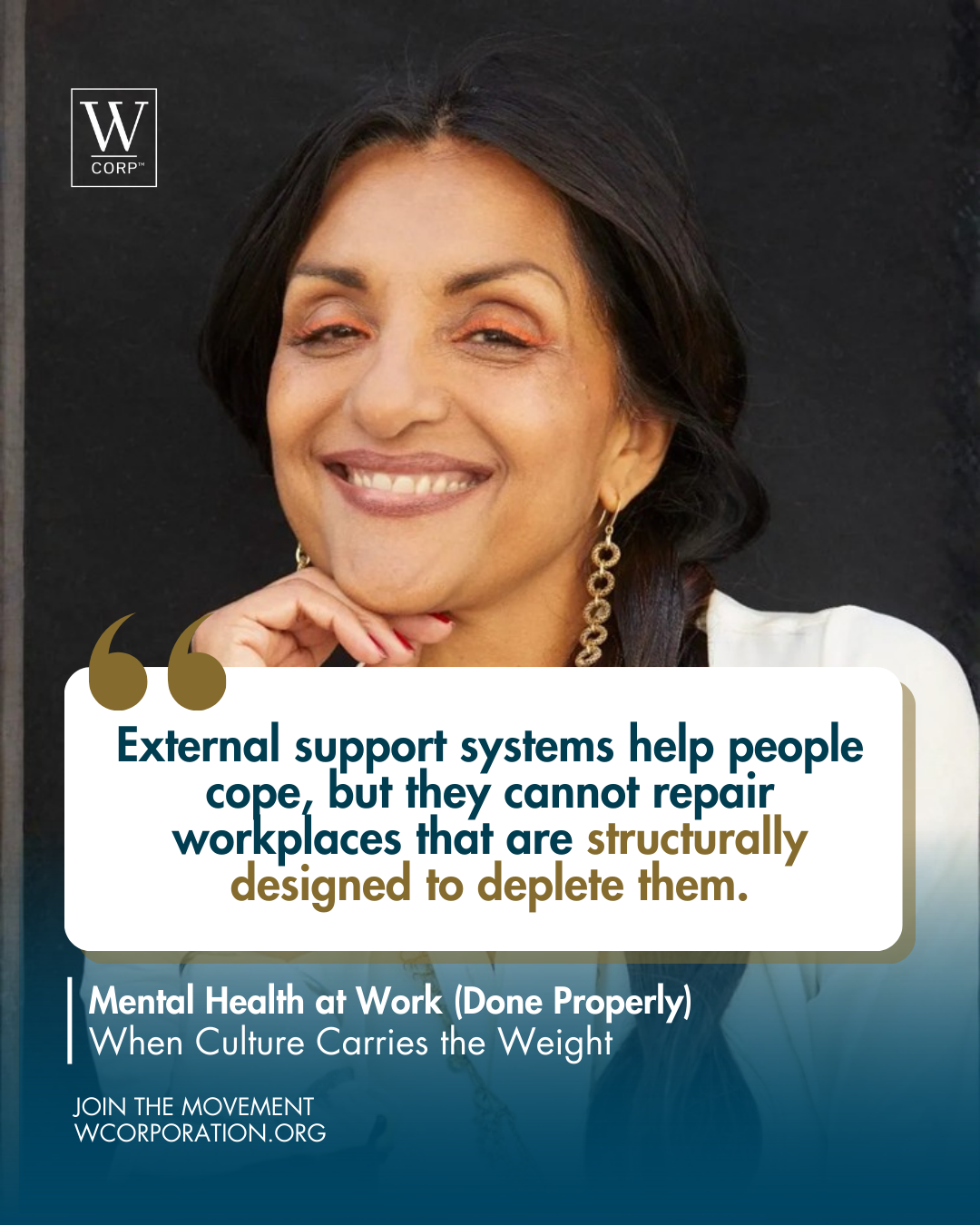
Yet mental ill-health at work continues to rise. This paradox reveals where the solution actually lives: external support systems help people cope, but they cannot repair workplaces that are structurally designed to deplete them. Mental health improves when culture, leadership and daily work design evolve together - when organisations address the conditions that create stress as seriously as they support the people experiencing it**.**

Work Design Shapes Mental Health
Daily workload, role clarity, autonomy, and management quality shape how people experience their jobs. Key workplace stressors - work intensity, limited control over tasks, insufficient managerial support, unclear expectations and poorly managed organisational change create stress predictably and persistently.
Mindfulness sessions, resilience training and employee assistance programmes provide valuable support. They help people build coping skills and access professional help when needed. Yet these interventions address symptoms, not causes. An employee struggling with an impossible workload gains little from breathing exercises when the workload itself remains unchanged. Real improvement comes from redesigning the conditions that generate stress in the first place.
Psychological safety allows people to ask questions, admit mistakes, raise concerns and seek help without fear of judgement or consequences. When employees feel safe speaking honestly, teams solve problems earlier, share workload more effectively and prevent small pressures from becoming crises. Leaders who build trust through consistent, supportive behaviour create environments where people can sustain focus, energy and performance over time.
Managers Carry Daily Responsibility
Decisions about deadlines, workload distribution, flexibility, and team culture determine whether employees feel supported or overwhelmed, capable or depleted. The quality of day-to-day management matters more than access to external support services.
Managers trained to notice early signs of stress, hold honest conversations, and adjust workloads before burnout takes hold create sustainable work environments. A manager who observes a team member struggling - perhaps arriving late, looking drained, or withdrawing from meetings - can open a simple conversation: "How are you coping?" That question, followed by practical action like redistributing tasks or adjusting deadlines, can prevent exhaustion from escalating into serious mental health problems. For 70% of employees, their manager has greater impact on their mental health than their doctor or therapist - and influence comparable to their partner.
For many women, workplace stress compounds with responsibilities that remain largely invisible at work. Women carry 71% of household mental load for organising home life, managing family schedules, coordinating care for children or aging parents, and carrying the emotional load of keeping everyone else okay, both at home and in professional settings. This invisible mental load adds constant pressure that most workplace systems do not acknowledge or accommodate.
Without understanding or flexibility from managers, this additional weight accelerates burnout. Inclusive leadership recognises these realities and adjusts expectations, workload and flexibility accordingly. When managers actively support women navigating these combined pressures, teams benefit from the experience, perspective and stability women bring.

Mental Health Is Part of Safe Work
Employers have a legal and moral duty to protect mental health alongside physical health. 1.9 million workers reported work-related ill health last year, with mental health conditions making up the majority. This affects productivity, engagement, decision-making and workplace safety. Mental health is a performance issue, a retention issue and a safety issue.
The drivers of workplace stress are tangible and addressable:
Workload and intensity - Unrealistic demands and constant urgency drain energy and erode focus.
Control and autonomy - People who have influence over how they work experience lower stress and higher engagement.
Support from managers and colleagues - Strong relationships buffer pressure and help teams navigate challenges together.
Role clarity - Clear expectations about responsibilities and success reduce anxiety and wasted effort.
How organisational change is managed - Transparent, inclusive change processes protect wellbeing during transitions.
Addressing these factors reduces stress at its source, protects employee wellbeing, strengthens team performance and creates cultures where people can contribute sustainably over time.
Flexibility Protects Energy
Flexible working arrangements reduce pressure, support mental health and enable people to balance life responsibilities alongside their professional contribution. Employees who can manage when and where they work report higher engagement, lower stress and stronger commitment to their organisations.
Flexibility addresses both visible and invisible burdens. A parent who starts later to manage school drop-offs preserves energy that would otherwise be spent juggling competing demands. A team member who works from home during a difficult week maintains focus without the additional drain of commuting or office distractions. These adjustments prevent small pressures from accumulating into exhaustion.
For women juggling caregiving and household mental load, flexibility often determines whether staying in work feels possible. When workplaces build flexibility as standard practice, women can focus on contribution rather than constant negotiation. Teams benefit from retaining experienced talent, diverse perspectives and institutional knowledge that would otherwise be lost.
Conversations Build Trust
Talking openly about mental health reduces isolation, builds connection and creates cultures where people feel safe being honest. Initiatives such as Time to Talk Day encourage employees to share experiences, check in with colleagues and normalise conversations about struggles that too often remain unspoken.
Teams that talk openly notice when someone is struggling. Informal check-ins - "How are you managing?" or "What would help right now?" - lead to practical responses: redistributing tasks, offering mentoring, adjusting deadlines or simply listening without judgement. Conversations become powerful when they lead to tangible support, not just acknowledgement.
Creating space for these conversations requires trust. People need to trust that honesty will be met with empathy rather than penalty, that admitting difficulty will lead to help rather than career consequences. Leaders set this tone through how they respond when people speak up, how they model healthy boundaries themselves and how consistently they follow through on commitments to support their teams.
As conversations about mental health become normal rather than exceptional, workplaces shift from reactive crisis management to proactive care. People ask for help earlier, teams adjust before burnout takes hold and organisations retain the talent, creativity and engagement that stress would otherwise erode.
Gender Equity Strengthens Wellbeing
Women carry extra responsibilities that shape how they experience work. The invisible mental load - organising home life, managing family schedules, coordinating care and providing emotional labour - adds constant pressure that most workplace systems ignore. Women working full-time face mental health challenges almost twice as often as men. This burden increases stress, erodes energy and accelerates burnout, particularly when workplaces operate as though these responsibilities do not exist.
Organisations that embed equity and fairness create environments where everyone can contribute fully. Inclusive leadership encourages idea-sharing, honest feedback and collaboration across differences. When leaders actively listen, adjust workloads to reflect real circumstances and create space for people to work in ways that match their lives, creativity rises, performance improves and teams strengthen.
Addressing gendered pressures strengthens teams. Women who feel genuinely supported contribute innovation, insight and creativity that drive business performance. Companies that prioritise gender equity see measurable improvements in decision-making, problem-solving and long-term resilience. Equity is a strategic advantage, not a moral add-on.
Culture Holds the Solution
Mental health improves when organisations integrate it into everyday work. Systems, behaviours and policies matter more than temporary programmes. Sustainable change comes from embedding wellbeing into how work is structured, how decisions are made and how people are led.
Organisations that take mental health seriously act on multiple fronts. They design reasonable workloads that allow people to do excellent work without constant exhaustion. They train managers to recognise stress early, hold supportive conversations and adjust expectations before burnout takes hold. They offer flexibility as standard practice, not as a favour requiring justification. They build psychological safety into teams so people can speak honestly, ask for help and raise concerns without fear. They ensure leadership models healthy boundaries, demonstrating through action that sustainable performance matters more than unsustainable heroics.
Culture carries the weight of wellbeing. When these elements work together, employees thrive, teams perform at their best and organisations achieve results that last. Retention improves. Innovation strengthens. Engagement becomes the norm rather than the exception.
At WCorp, we champion leadership that prioritises mental health as central to performance, equity, and innovation. Workplaces that design work with genuine care for the people doing it protect talent, build resilience, and deliver sustainable success. This approach changes lives and transforms business outcomes. Both matter equally.