Black Mothers Face Double the Risk. Here’s Why Workplaces Can’t Ignore It.
Dec 01, 2025
#MaternalHealth #WorkplaceEquity #WomenInLeadership #MaternitySupport #InclusiveWorkplaces #EmployeeWellbeing #DEI #EquityInTheWorkplace #WomenAtWork #FutureOfWork
Discover why maternal health matters for businesses. Learn how supporting women during pregnancy and maternity improves equity, retention, and workplace wellbeing while reducing disparities in infant mortality.
By WCorp Editorial Team
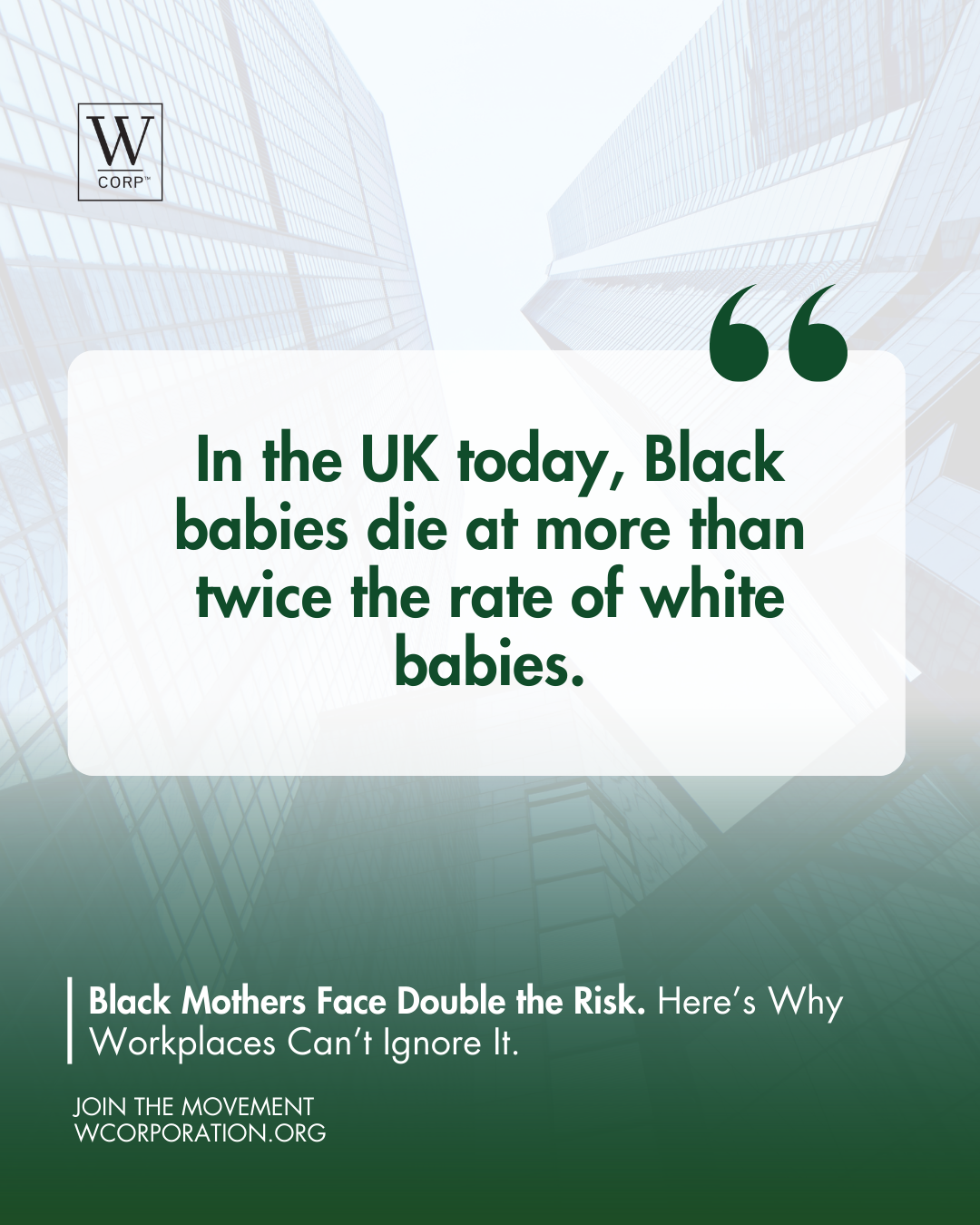
Every infant lost is a story interrupted and a family forever changed. Every year in the UK, Black mothers lose babies at more than twice the rate of white mothers. These losses reach into our workplaces and touch the lives of colleagues, team members and leaders. Across the country, families continue to face preventable tragedies that reflect deep inequalities. Infant mortality rates need national attention, and Geeta Sidhu-Robb will highlight this urgent issue in her TEDx talk on 4 December.
At WCorp, we recognise women as whole people with layered responsibilities, ambitions, and identities. We support women at every stage of life, including maternity. Maternal health shapes equity, retention, wellbeing and long-term business performance.
The Reality of Ethnic Disparities in Infant Mortality
Black and Brown mothers face higher risks throughout pregnancy and early parenthood. The National Child Mortality Database reports that in the year ending March 2025, Black or Black British infants had a death rate of 7.0 per 1,000 live births, compared to 3.0 per 1,000 for white infants. Infants of Asian or Asian British ethnicity had a rate of 5.2 per 1,000.
The Office for National Statistics recorded Black infants as having the highest mortality rate in England and Wales in 2023. The NCMD 2024 report shows a steep divide between communities, with infant mortality more than twice as high in the most deprived areas.
These numbers reflect parents who need understanding, care and support. They reflect mothers who navigate pregnancy while carrying a heavier burden of stress, risk and systemic inequality.
Why Businesses Have a Role
Maternal health connects directly to workplace wellbeing and retention. Comprehensive maternity support builds trust, strengthens loyalty, and helps women protect their health while sustaining their careers. Flexible working, thoughtful benefits and equitable policies empower women to balance work and family life. Carefully designed support systems create thriving teams and inclusive cultures.

How Companies Can Make a Difference
Companies can take meaningful action with practical steps:
- Strengthen maternity policies: Provide maternity leave, return-to-work coaching, and health benefits that reach women across all ethnic groups.
- Offer flexible working: Create remote and hybrid options, flexible hours and phased returns that help mothers manage family responsibilities.
- Train leaders in equity-informed management: Equip managers with the skills to hold supportive conversations about health, workload, and career progression.
- Monitor outcomes: Track employee wellbeing and satisfaction by ethnic group to identify gaps and build stronger support systems.
- Partner with community and healthcare organisations: Work with maternal health charities, NHS partners, and community groups to extend support beyond the workplace.
WCorp’s Commitment
WCorp is committed to helping organisations create cultures where women feel supported and valued during maternity and throughout their careers. Maternal health equity strengthens workplaces, protects talent and promotes sustainable growth. Geeta’s TEDx talk reminds us that businesses hold the power to create meaningful change. Supporting women during maternity creates stronger families, healthier workplaces, and futures built on care and equality. Every company that invests in maternal health helps build a future where women and families rise with stability, opportunity, and the support they deserve.