
Why Limiting Beliefs Continue to Shape Who Gets Ahead at Work
Jun 01, 2026
By WCorp Editorial Team
#WomenInLeadership | #LeadershipDevelopment | #WorkplacePerformance | #TalentRetention | #GenderEquity | #BusinessGrowth | #MindsetAtWork | #WomenInBusiness | #CultureROI | #FutureOfWork
The Promotion She Never Applied For
She was ready. Her manager knew it. Her track record said it. Then the job was posted, and she read the description four times, decided she met perhaps 70% of the criteria, and quietly talked herself out of applying.
A male colleague with a shorter track record applied the same day.
This scene plays out thousands of times a week across UK businesses. And every time it does, companies lose more than one promotion cycle. They lose the compounded return that comes from putting the right person in the right role.
The Research Behind the Pattern
An internal audit at Hewlett-Packard found that women applied for promotions only when they believed they met 100% of the listed qualifications. Men applied when they felt they met around 60%.
Harvard Business School research confirmed women consistently self-select out of senior roles where they perceive a gap, even when that gap does not exist. A separate Harvard study asked men and women to score their own performance after completing an identical test. Men gave themselves 61 out of 100 on average. Women gave themselves 46. The actual scores were the same.
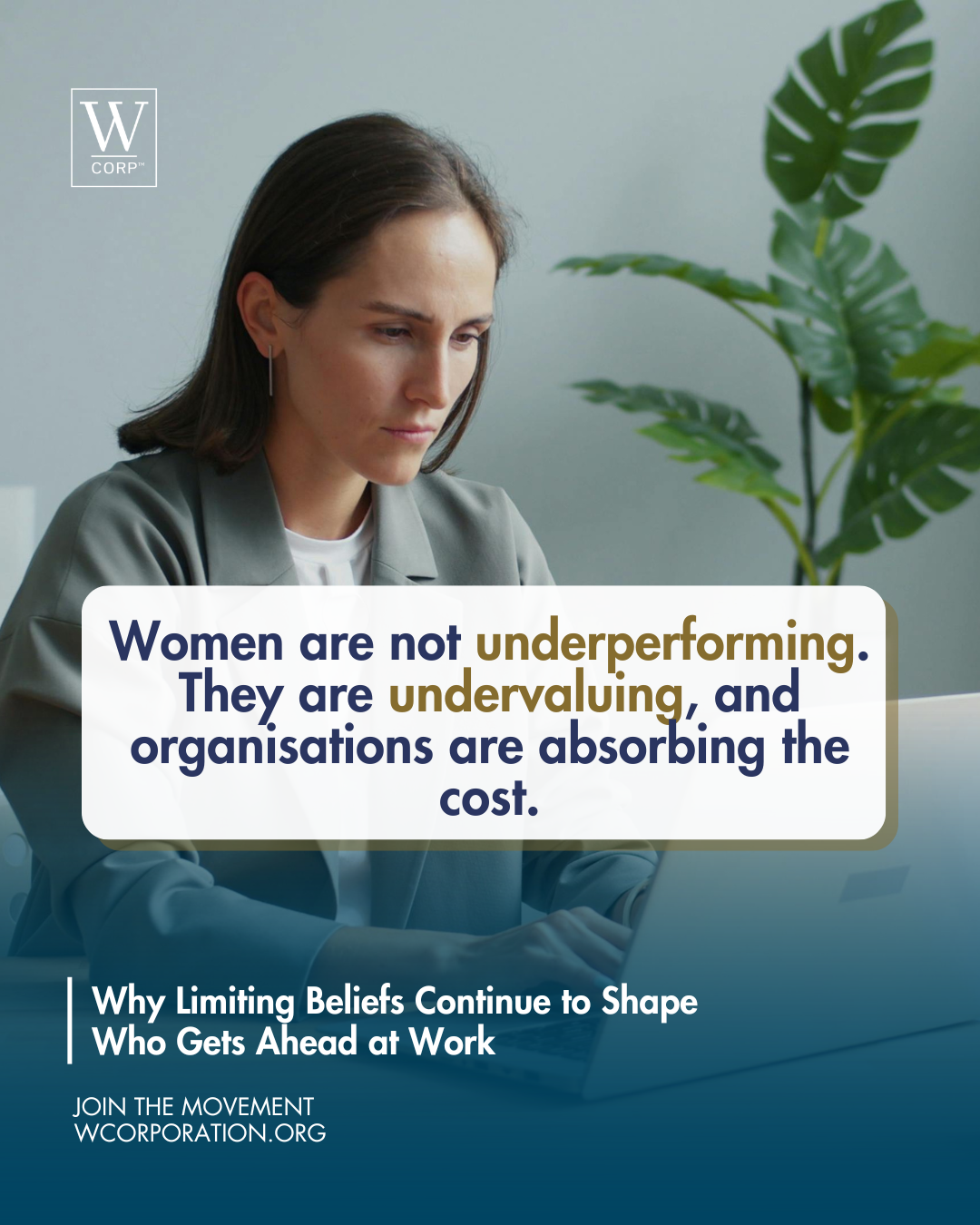
Women are not underperforming. They are undervaluing, and organisations are absorbing the cost.
This is not a pipeline problem. It is a performance problem. And it belongs on the CFO's desk, not just the HR team's.
Self-Doubt Does Not Stop at the Senior Level
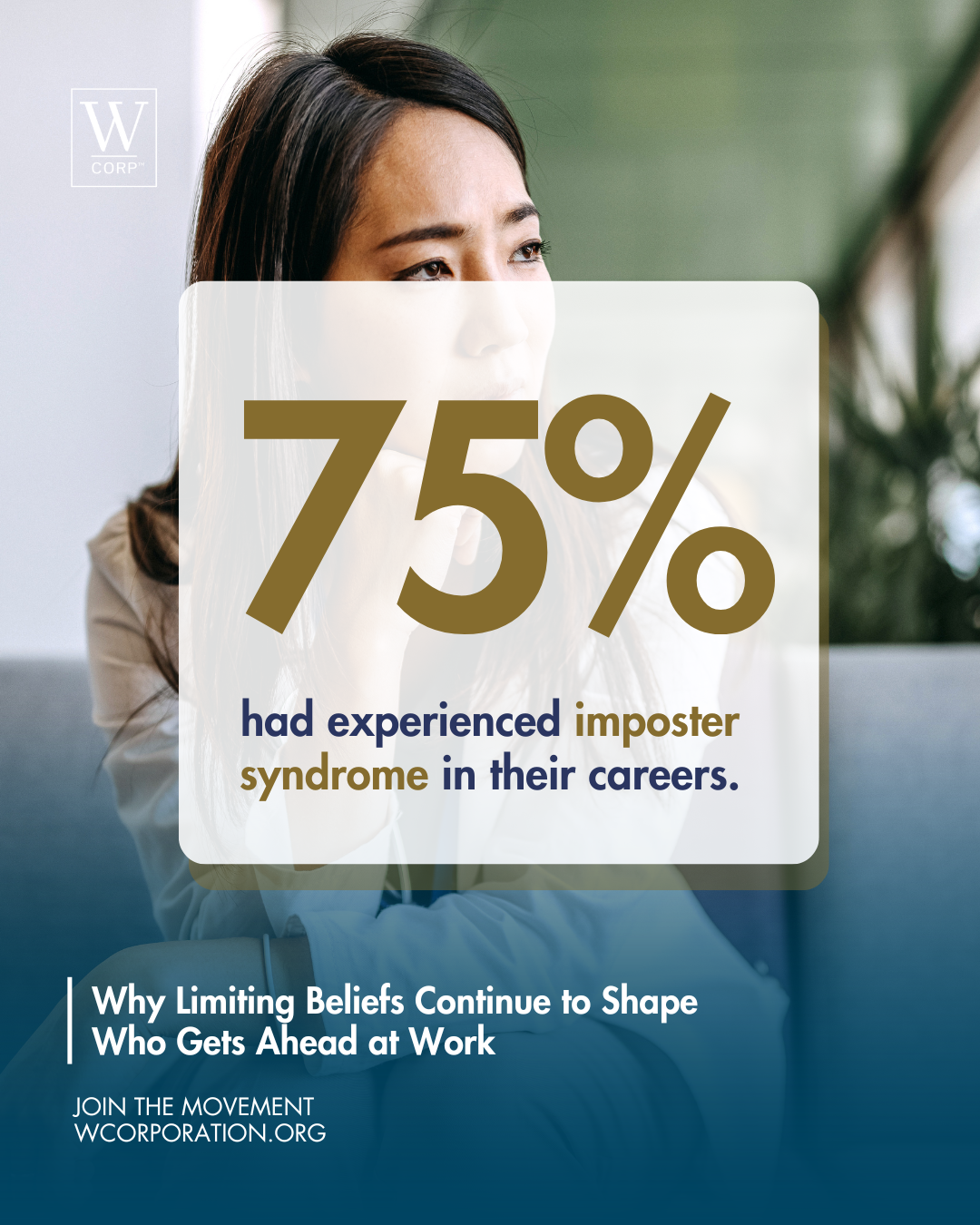
A KPMG study of 750 female executives across more than 150 leading organisations found that 75% had experienced imposter syndrome in their careers. Of those, 81% said they put more pressure on themselves not to fail than their male peers did.
The financial damage is measurable. Research cited in TrainingZone found that imposter syndrome costs UK businesses up to ten full working days per employee per year, through over-preparation, second-guessing and the inefficiency of leading from chronic self-doubt.
Multiply that across a leadership team, and the cost stops being an HR issue and starts being a line on the profit and loss account.
Where These Beliefs Come From
Limiting beliefs in women are not innate. They are learned, in organisations that signal, repeatedly and structurally, that women must prove themselves to a higher standard.
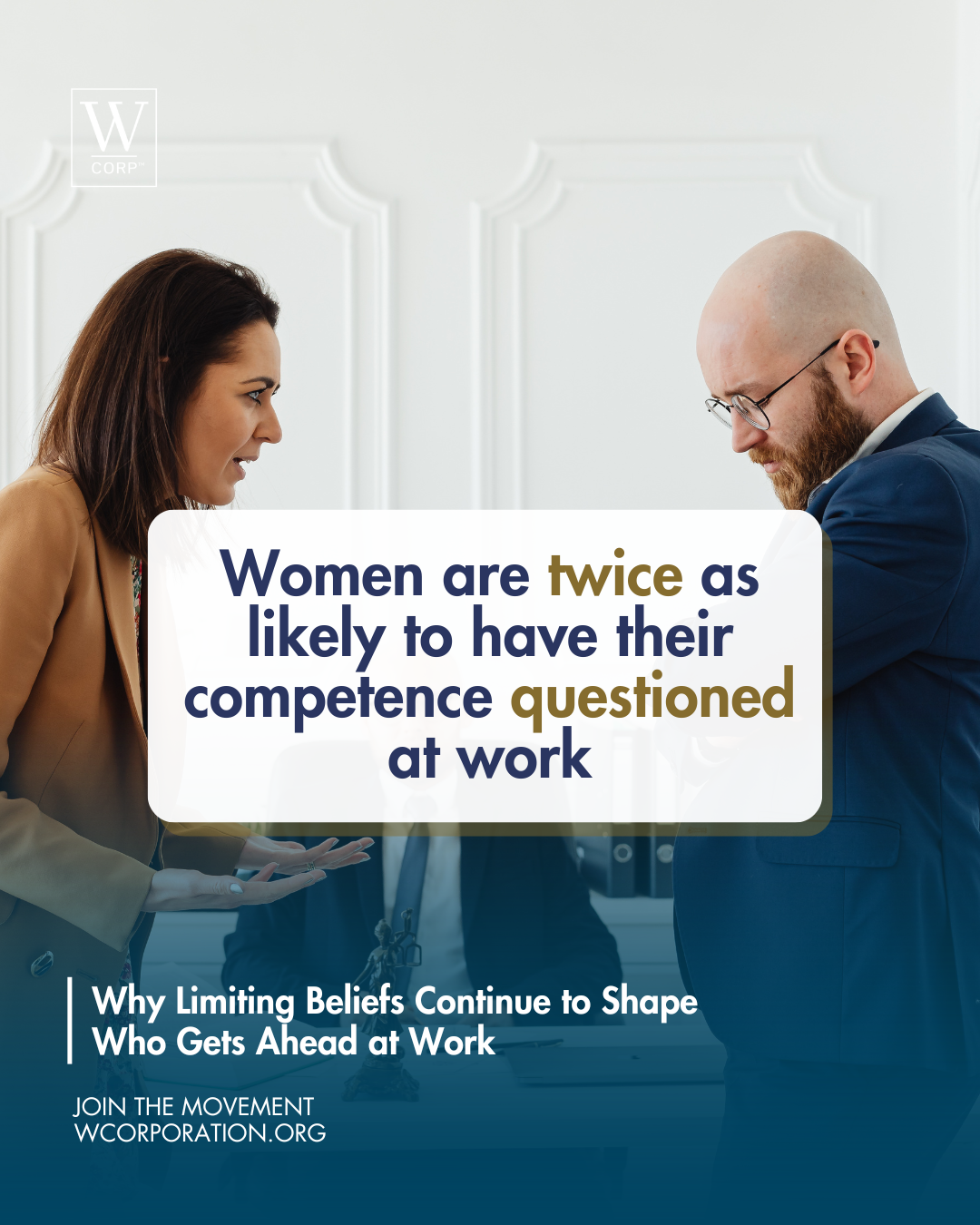
LeanIn and McKinsey show that women are twice as likely to have their competence questioned at work. The Deloitte Women @ Work 2024 report found 43% of women experienced non-inclusive behaviours in the previous year.
Women make up 49% of entry-level employees. By the C-suite, that drops to 29%, unchanged for the eleventh consecutive year, per McKinsey's 2025 Women in the Workplace report. The talent enters the business. Culture removes it on the way up.
The Two Levers Organisations Keep Pulling Apart
Most businesses treat the inner and outer dimensions of this problem as separate issues. Leadership development sits in one budget line. Culture change sits in another. Neither delivers its full return in isolation.
When a woman does the mindset work to move past self-doubt and step forward with more confidence, she returns to a culture that still questions her judgment, passes high-visibility projects to someone else, and rewards the colleague who applied at 60%. The beliefs come back. The investment stalls.
The structural conditions have to keep pace with the individual development. One without the other is money left on the table.
McKinsey's Diversity Wins research found companies in the top quartile for gender diversity are 25% more likely to achieve above-average profitability. That return does not come from training programmes alone. It comes from organisations that build the culture to match the ambition of the women inside it.
A Practical Agenda for Leaders
- Make promotion criteria explicit. Ambiguity penalises women who wait until they are certain. When the bar is clear, more women clear it.
- Audit feedback quality. Women receive less specific, actionable feedback than men at equivalent levels. Honest challenge builds readiness. Generic praise does not.
- Build sponsorship, not just mentoring. Sponsors use their own credibility to open doors. Women are over-mentored and under-sponsored, and the data is clear on which one drives promotions.
- Track where women self-select out. Consistent patterns of women not applying for senior roles is a culture signal, not a confidence deficit.
The Real Question for Leaders
If the women in your business are underestimating their readiness and leading from chronic self-doubt, your performance data is not showing you what your talent is actually capable of.
How much of your leadership potential is sitting unused, and how much longer will you wait to unlock it?
The organisations that act will build stronger pipelines, bolder leaders and the commercial performance that follows when talented women lead at full capacity.
WCorp certifies organisations that build workplaces where women lead, progress and perform. Find out how WCorp Certification can help your business retain its best talent.


