
The Hidden Cost of Being the "Reliable" Woman at Work
May 25, 2026
By WCorp Editorial Team
#WomenInLeadership | #WorkplaceEquity | #TalentRetention | #GenderPayGap | #LeadershipDevelopment | #InclusiveWorkplace | #WomenInBusiness | #FutureOfWork | #CultureROI | #GenderEquity
The Woman Every Team Relies On
You know her. She organises the onboarding when HR is stretched. She takes the meeting notes, mentors the new hire, volunteers for the committee nobody else wants, and holds the team together during a difficult quarter. She is dependable, capable, and well-liked.
She is also, in all likelihood, being quietly passed over.
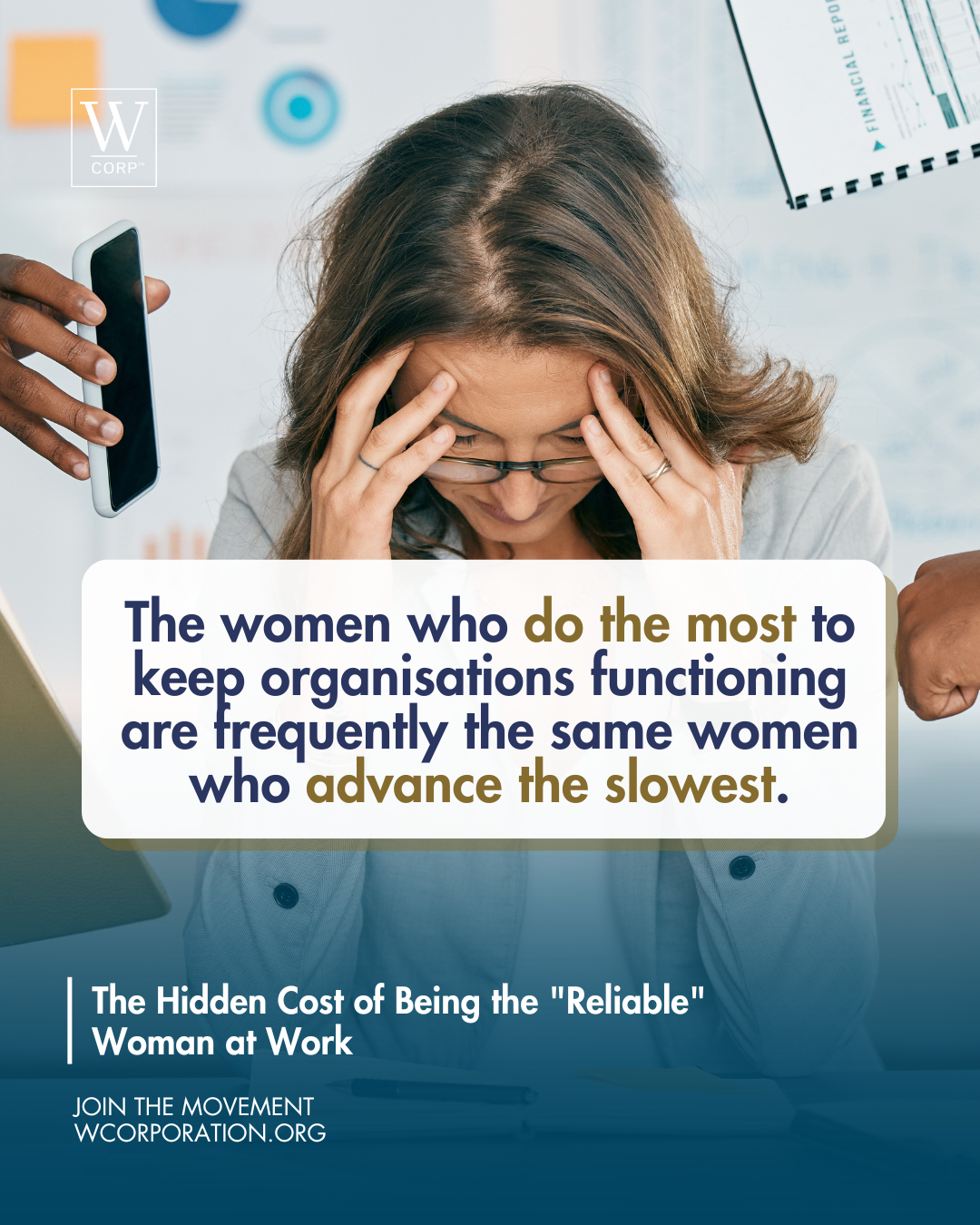
There is a well-documented pattern running through workplaces across the UK and beyond. The women who do the most to keep organisations functioning are frequently the same women who advance the slowest. Not because they lack talent or ambition. But because the work they are doing, however essential, does not count where it matters most: in promotion decisions, pay reviews, and leadership pipelines.
The Research Is Clear
Researchers Linda Babcock, Maria P. Recalde, and Lise Vesterlund identified the phenomenon in a landmark study published by Harvard Business Review. They called it the non-promotable task problem. These are tasks that matter to the organisation but do not contribute to career advancement: taking minutes, organising events, leading internal committees, providing informal emotional support, managing team morale.
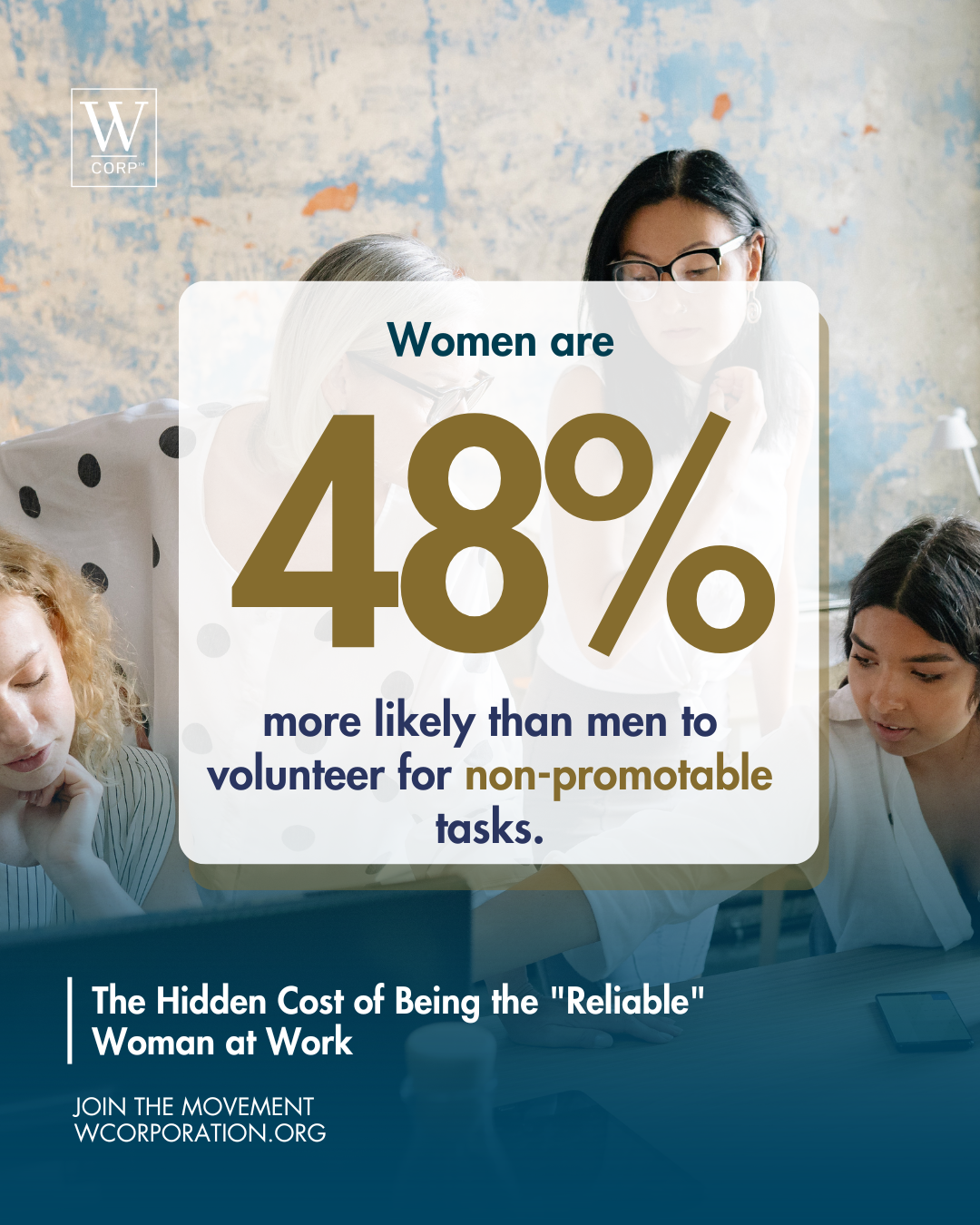
The findings were stark. Women are 48% more likely than men to volunteer for these tasks. When managers need someone to take on non-promotable work, they ask women, regardless of the manager's own gender. And when asked, women say yes 76% of the time, compared to 51% for men.
Women spend approximately 200 more hours per year on non-promotable tasks than their male counterparts. That is nearly a full extra month of work annually, generating no return in pay, promotion, or recognition.
What This Looks Like Inside Your Business
The problem compounds quietly. A woman spends hours mentoring junior staff while her male colleague leads the high-visibility client project. She sits on the wellbeing committee; he presents to the board. She writes up the meeting; he runs it. Over months and years, the gap between their career trajectories widens, not because of any single decision, but because of hundreds of small ones.
The consequences show up in the data. Women with 11 to 20 years of experience in UK tech wait more than three years for a promotion on average, compared to two years for men at equivalent levels, according to the 2025 Lovelace Report by WeAreTechWomen and Oliver Wyman. Between 40,000 and 60,000 women leave the UK tech sector every year, costing the economy an estimated £2 to £3.5 billion annually in lost productivity.
The tech sector is not an exception. It is a mirror.
The Business Case for Changing This
When organisations allow non-promotable work to fall disproportionately on women, they are making an active investment decision. They are keeping certain people busy with work that does not build their careers, while others accumulate the experience and visibility that leads to leadership.
The return on that investment is poor.
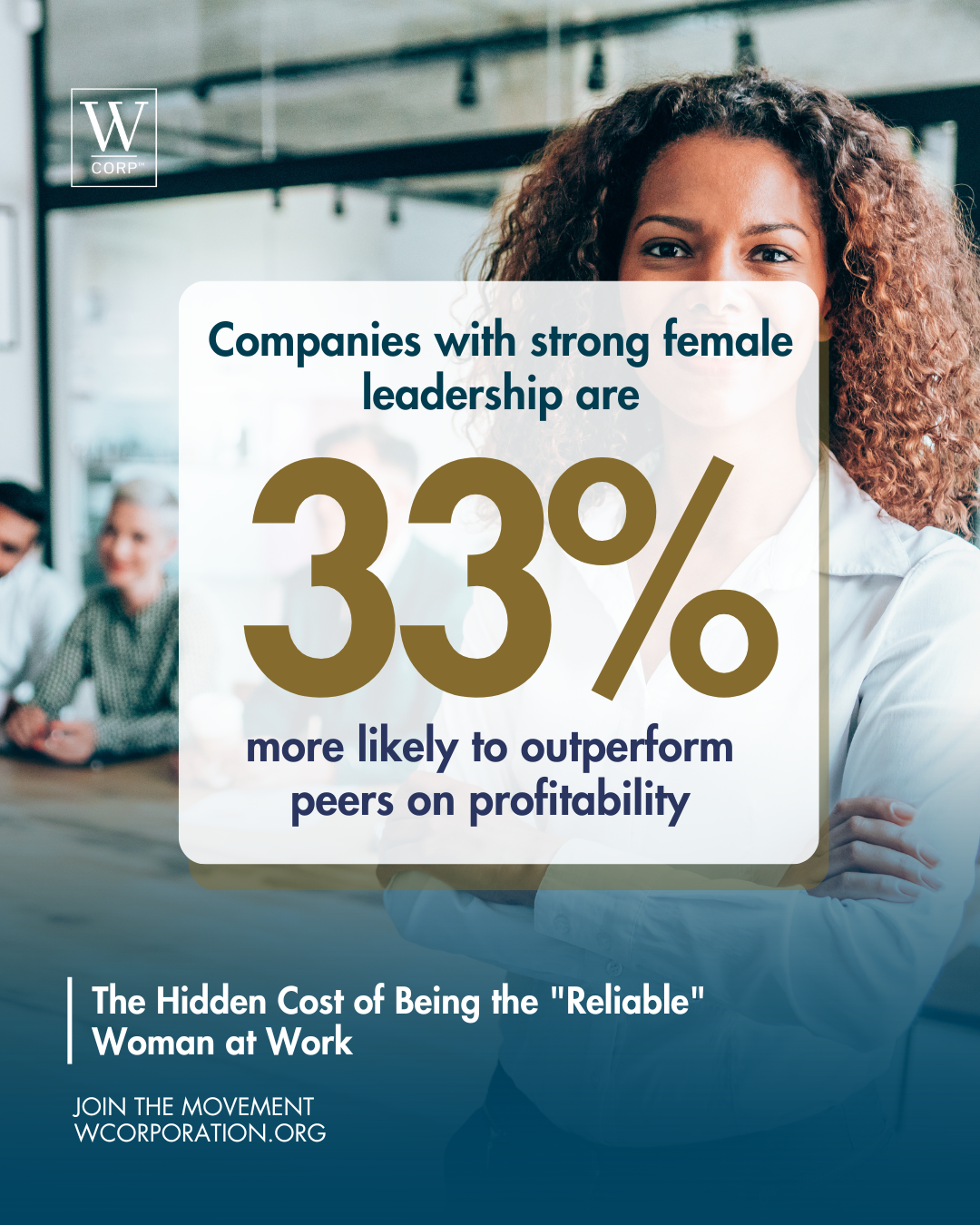
Senior women who leave take institutional knowledge, client relationships, and accumulated expertise with them. Replacing a single senior employee costs between £30,000 and £35,000 according to Oxford Economics. Companies with strong female leadership, by contrast, are 33% more likely to outperform their peers on profitability, according to McKinsey.
The organisations losing that performance gain are often the same ones praising their most reliable women in all-staff emails while systematically failing to promote them.
What Leaders Can Do Now
Audit how work is assigned. Most organisations have no data on who is doing non-promotable work and how often. Tracking task allocation by gender reveals patterns individual managers cannot see from their own vantage point.
Rotate non-promotable tasks. When tasks are offered up for anyone to grab, women grab them more. Systematic rotation distributes the load and removes the social pressure that falls disproportionately on women.
Make promotable work explicitly available. High-visibility projects, client-facing roles, and strategic initiatives should be actively offered to women, not left for those who push hardest to access them.
Tie performance evaluation to contribution. If a woman has spent a year running the mentoring programme and holding a team together through a leadership transition, that should carry real weight in her review. If it does not, the organisation is signalling exactly what it values.
The Real Question for Leaders
The reliable woman in your organisation is not a resource to be managed. She is a leader in the making, or the leaving.
The organisations that act on this will build stronger pipelines, better retention, and the cultural credibility that defines high-performance businesses. The ones that do not will keep writing warm tributes to women who no longer work there.
WCorp helps organisations build workplaces where women's contributions are measured, valued, and rewarded. Find out how WCorp Certification can help your business turn equity into a competitive advantage.


