How does an elevator pitch disadvantage women?
May 04, 2026
Leaders are still relying on a communication tool designed for a world that no longer exists. The companies that adapt first will gain an edge in influence, innovation, and talent.
The Elevator Pitch Belongs to a Different Era
The elevator pitch was created for a workplace where attention was predictable, hierarchies were rigid, and influence flowed in one direction. That world has disappeared. Leaders now operate in an environment shaped by distributed teams, rapid decision cycles, and information overload. The average professional receives more than 120 emails a day and switches between tasks over 300 times. These conditions make the traditional thirty second pitch ineffective.
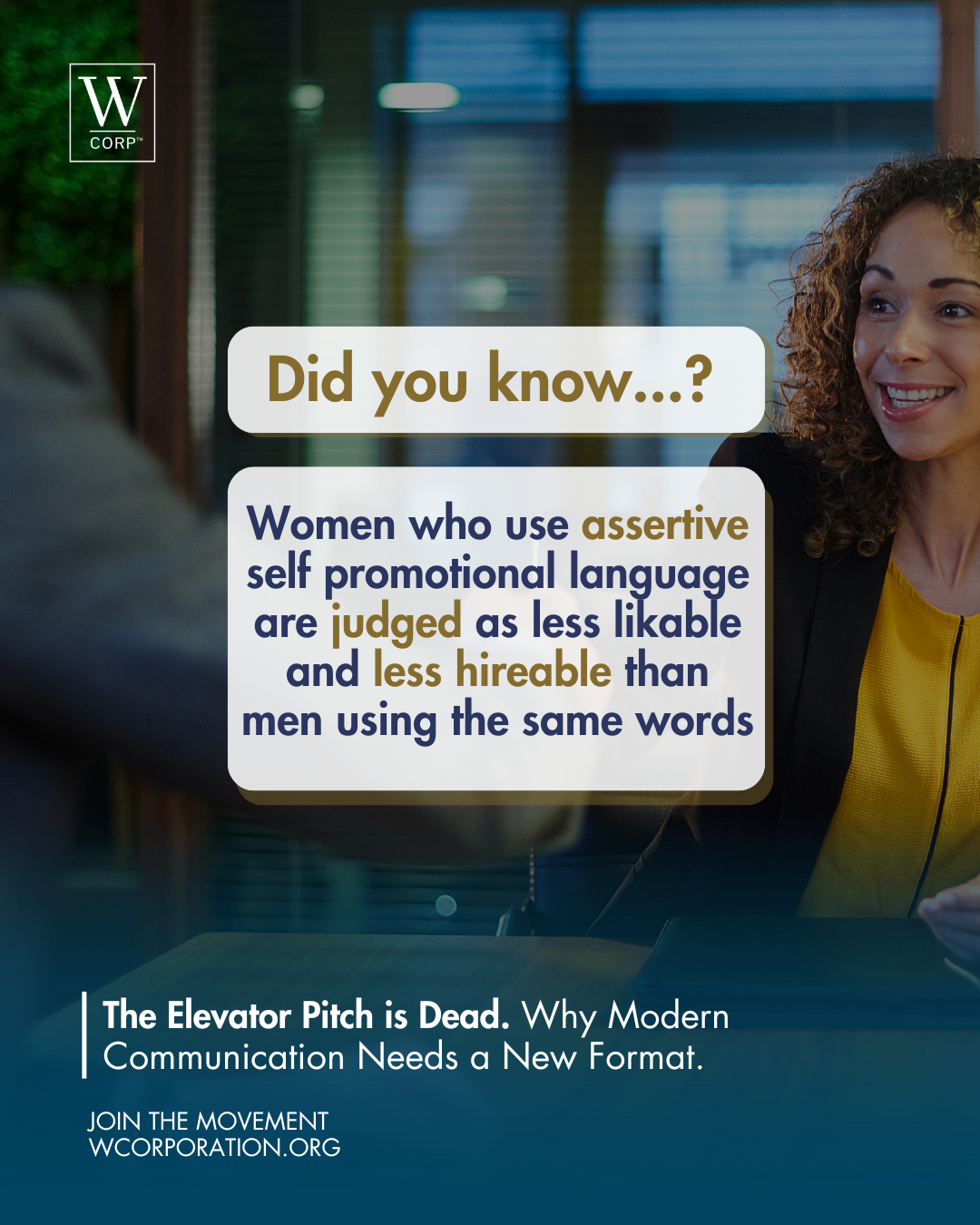
The elevator pitch compresses a person or idea into a single rehearsed statement. It rewards confidence over clarity and performance over substance. It also disadvantages women, who face higher penalties for self promotion. Research from the University of Arizona found that women who use assertive self promotional language are judged as less likable and less hireable than men using the same words. A communication format that amplifies bias cannot serve modern leadership.
Why Leaders Need a New Communication Model
The companies that outperform their competitors are the ones that communicate in ways that build trust quickly. Trust is now a measurable business asset. Edelman’s Trust Barometer reports that high trust organisations see 2.5 times higher employee engagement and significantly stronger customer loyalty. The elevator pitch does not build trust. It creates distance. It feels transactional. It reduces complex people and ideas into slogans.
Modern leadership communication needs to create connection, not compression. It needs to show thinking, not performance. It needs to invite dialogue, not deliver a monologue. These qualities drive better decision making, stronger collaboration, and faster alignment.

The Rise of the Story Signal
A more effective alternative is emerging across high performing teams: the story signal. A story signal is a short, specific narrative that reveals how a person thinks, what they value, and how they solve problems. It is not a pitch. It is a signal of leadership identity.
A story signal might sound like:
“I help teams make decisions faster by simplifying complex information. Last quarter I redesigned our reporting process and reduced meeting time by 40 percent.”
This format does three things the elevator pitch cannot. It shows impact. It shows capability. It shows credibility. It also gives the listener something to respond to, which creates a natural conversation instead of a performance.
Women benefit significantly from this shift. Story signals allow women to demonstrate expertise without triggering the penalties associated with traditional self promotion. They also create more equitable visibility because they focus on outcomes rather than personality.
The Business Case for Retiring the Elevator Pitch
Companies that adopt story based communication see measurable gains. Narrative communication improves information retention by up to 70 percent, according to research from Stanford University. When leaders communicate with clarity and narrative structure, teams align faster and execute more effectively.
There is also a direct financial benefit. McKinsey reports that companies with strong internal communication practices are 3.5 times more likely to outperform their peers. The elevator pitch does not strengthen internal communication. Story signals do. They reduce misalignment, accelerate onboarding, and improve cross functional collaboration.
For women, the economic impact is even more significant. When women can communicate their value without navigating bias penalties, their promotion rates increase. The World Economic Forum estimates that closing gender gaps in leadership could add 28 trillion dollars to the global economy. Communication tools that support equitable visibility contribute directly to this gain.

What Leaders Can Do Today
Forward thinking organisations are already shifting away from the elevator pitch. They are training teams to use story signals in meetings, performance reviews, and cross functional projects. They are redesigning networking events to prioritise conversation over performance. They are coaching leaders to ask better questions that draw out narrative insights.
Leaders can start with three simple practices:
- Ask for examples instead of summaries.
- Encourage teams to share short stories about recent wins or challenges.
- Replace “Tell me about yourself” with “What problem are you most energised by right now?”
These practices create more inclusive communication environments. They also surface better information, which improves decision quality and reduces risk.
The Future of Leadership Communication
The elevator pitch will not disappear overnight. It is familiar. It is easy to teach. It feels efficient. But it no longer reflects how influence works. Modern leadership requires communication that is relational, contextual, and grounded in real outcomes.
The companies that retire the elevator pitch first will gain a competitive advantage. They will attract stronger talent. They will make better decisions. They will build cultures where women can communicate their value without penalty. They will create environments where innovation grows because people feel safe to speak with clarity.
The real question for leaders is simple. If your teams are still relying on a communication tool built for a different era, what opportunities are you losing by holding on to it?