Highly Educated Women Don't Become Business Leaders... Why?
Apr 27, 2026
Women lead in education but lag in leadership. Explore the hidden barriers affecting progression and what businesses can change to unlock performance.
By WCorp Editorial Team
April 2026
#WomenInLeadership #LeadershipPipeline #TalentStrategy #WorkplacePerformance #FutureOfLeadership #OrganisationalPerformance #LeadershipDevelopment #TalentRetention #CultureROI #WCorp
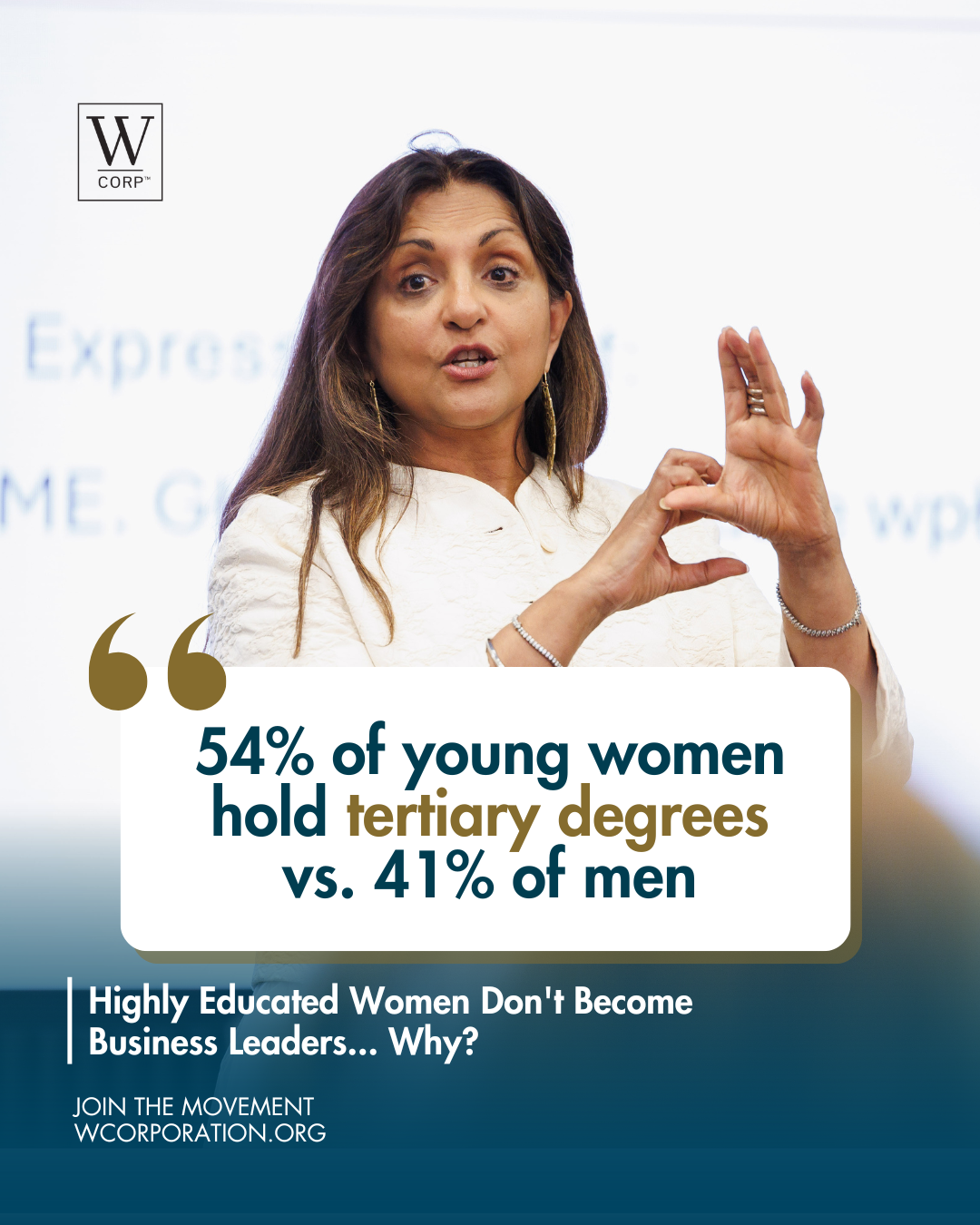
Across most developed economies, women now make up the majority of university graduates. OECD's latest Education at a Glance 2024 confirms 54% of young women hold tertiary degrees vs. 41% of men, a gap persisting for over a decade.
The pipeline is strong.
And yet, leadership teams tell a different story.
This gap often gets framed as a progression issue. But that only explains part of it. The more useful question for businesses is this:
What happens to highly educated women once they enter the workplace, and why does that potential not convert into leadership at scale?
Education Rewards Performance. Workplaces Reward Behaviour
Education systems are built around clarity. Deliver the work, demonstrate capability, progress.
Workplaces are more complex. Progression depends on performance, but also on visibility, influence, and how individuals navigate power structures.
This is where something more subtle starts to play out.
In our recent WCorp blog on Why We Fawn - and the Cost of Keeping the Peace, we explored how many women develop a tendency to smooth conflict, avoid friction and maintain harmony at work.
These behaviours are often adaptive. They help people succeed early in their careers. They build relationships, create trust and keep teams functioning.
But at leadership level, the rules shift.
Progression starts to favour those who challenge, take visible ownership, and push decisions forward.
The same behaviours that helped women succeed early can quietly hold them back later.
The Cost of “Keeping the Peace” in Leadership Pathways
This is not about confidence or ambition. It is about alignment.
If someone consistently avoids conflict, they are less likely to:
- Challenge senior decisions
- Put themselves forward for high-risk, high-visibility projects
- Negotiate for progression or pay
Over time, that compounds.
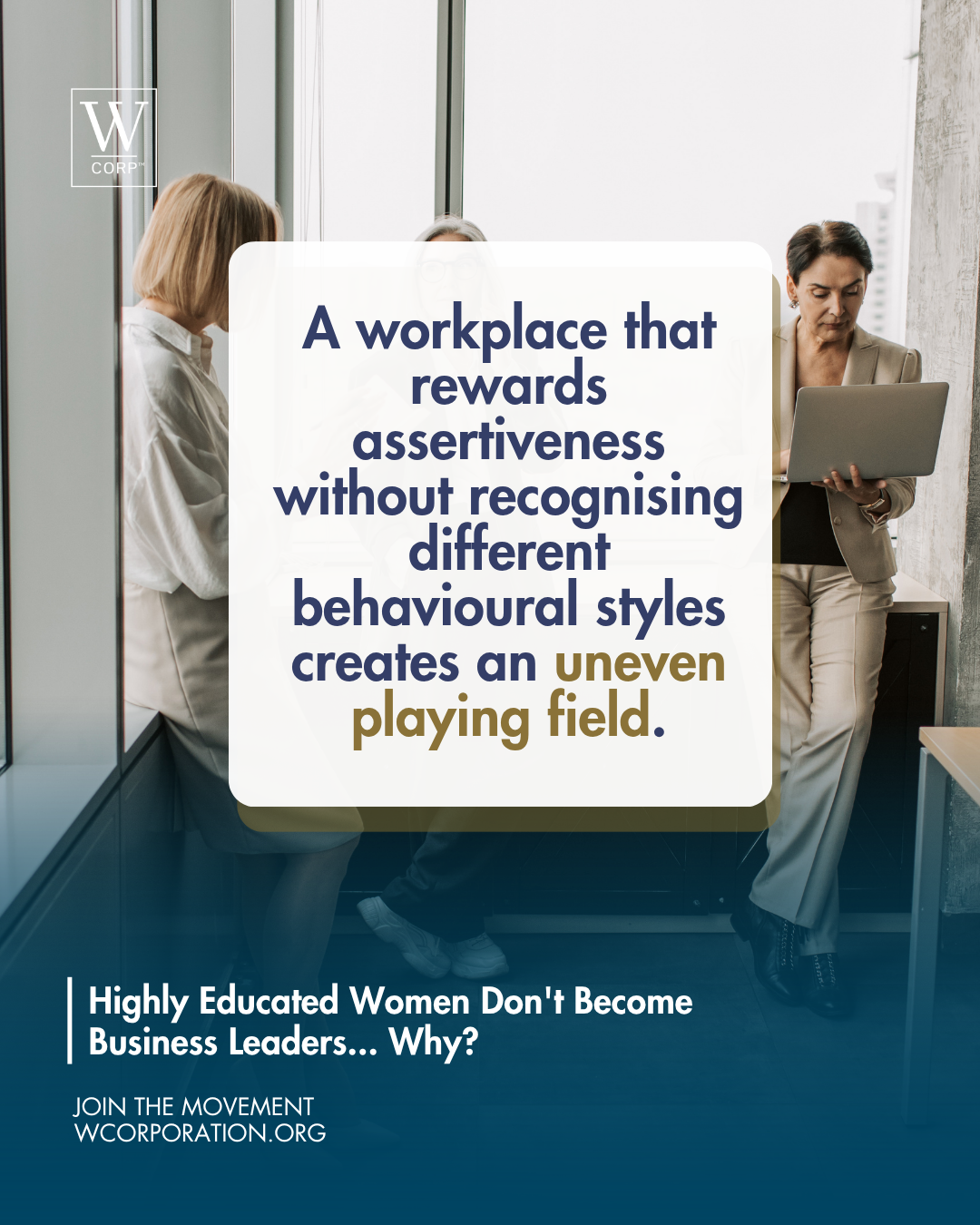
A workplace that rewards assertiveness without recognising different behavioural styles creates an uneven playing field, even when capability is equal.
This helps explain why education alone is not translating into leadership outcomes.
The system values a narrower range of behaviours than the education system does.
Organisations are not Neutral Environments
It is easy to assume that once talent enters the workplace, progression becomes merit-based.
In reality, most organisations still rely heavily on informal signals.
- Who speaks up in meetings
- Who gets noticed by senior leaders
- Who is seen as “ready”
Research highlighted by the Senate of Canada shows that even in fields like science, where women graduate in strong numbers, retention and progression remain low due to structural and cultural barriers within organisations.
These are not always explicit barriers. They are patterns that build over time.
And they interact directly with behaviour.
This is Where Businesses are Losing Value
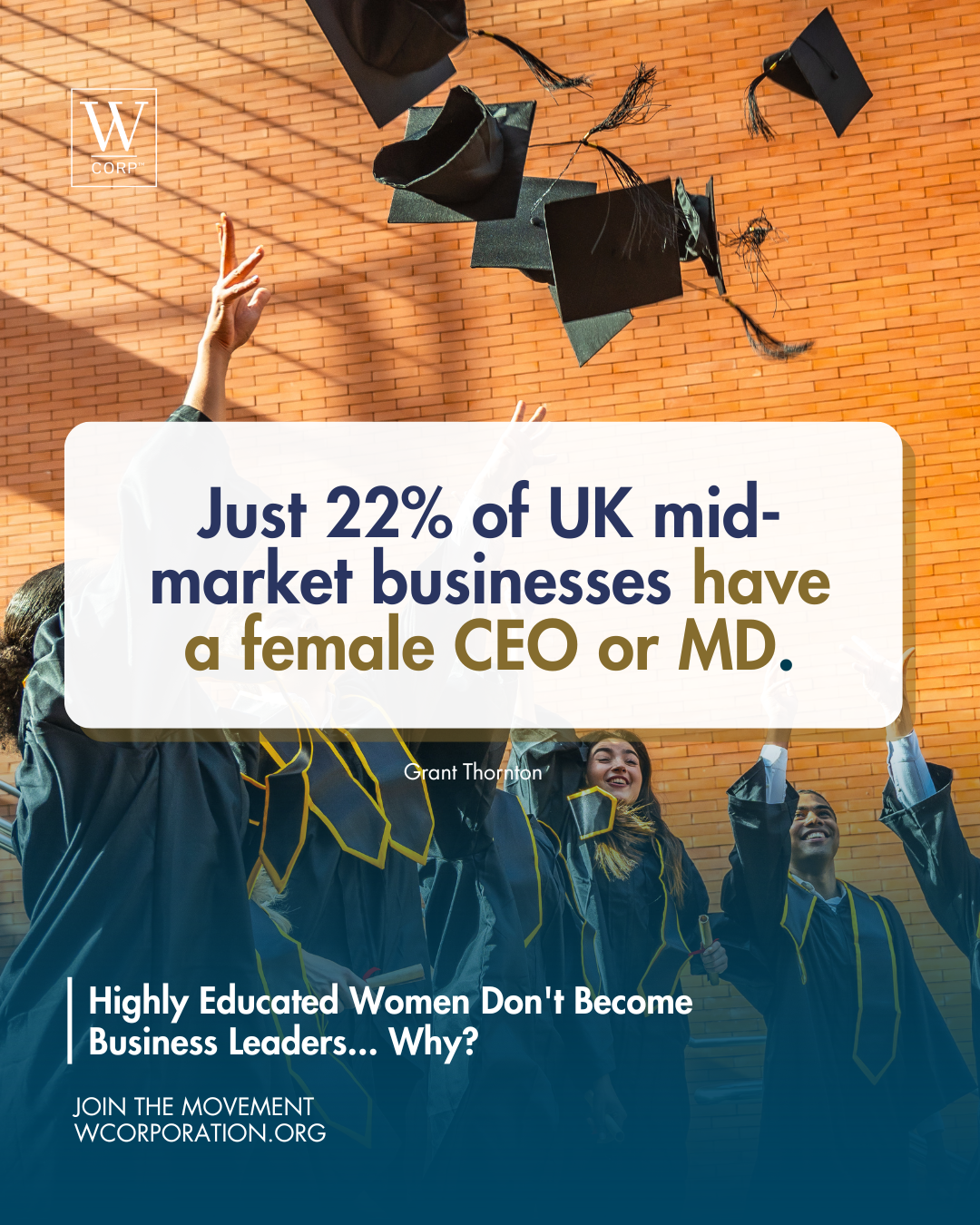
From a commercial perspective, this is a talent conversion issue.
Companies are investing in highly educated talent. They are bringing in capable, qualified women at entry level.
But progression systems are not designed to convert that capability into leadership consistently.
Some of that sits in structure. Some of it sits in culture. And some of it sits in the behaviours that are rewarded or overlooked.
When those elements do not align, talent stalls or leaves.
This impacts productivity, leadership capacity, and the return on talent investment. For many organisations, this is one of the least visible and most expensive leaks in performance.
What Needs to Shift
This is not about asking women to change how they behave. It is about widening what leadership looks like and how it is recognised.
There are practical ways to do this.
- Make progression criteria explicit
Clarity reduces reliance on informal judgement. It ensures that performance, not perception, drives advancement.
- Value different leadership styles
Decisiveness and challenge matter. So do collaboration, trust-building, and long-term thinking. High-performing organisations recognise both.
- Create space for constructive conflict
If disagreement is seen as part of decision-making rather than disruption, more people will engage in it.
- Train managers to recognise behavioural bias
Who gets labelled as “leadership material” is often shaped by familiarity. Expanding that lens changes outcomes.
- Support behavioural shifts without penalising them
When individuals start to speak up more or take visible ownership, the response they receive matters. It needs to reinforce, not discourage, that shift.
A More Honest View of the Gap
The conversation around women in leadership often focuses on external barriers or internal confidence.
The reality sits somewhere in between.
Women are entering the workforce highly educated and capable. They are navigating systems that reward specific behaviours. Many adapt to succeed. Some of those adaptations later limit progression.
At the same time, organisations continue to define leadership in relatively narrow terms.
Until those two things are addressed together, the gap will persist.
The Opportunity for Business
This is not a pipeline problem.
It is a conversion opportunity.
Companies that understand how behaviour, culture, and progression systems interact will unlock more value from the talent they already have.
They will see stronger leadership pipelines, better decision-making, and more consistent performance at senior levels.
And importantly, they will stop losing highly capable people at the point they are ready to lead.