
Diversity Quotas vs. Inclusive Culture: What Businesses Still Get Wrong
Jun 09, 2026
By WCorp Editorial Team
#WomenInLeadership | #WorkplaceEquity | #TalentRetention | #InclusiveWorkplace | #LeadershipDevelopment | #GenderEquity | #BusinessGrowth | #CultureROI | #FutureOfWork | #WomenInBusiness
The Hire Is Not the Finish Line
Picture the scene. A company sets a diversity target. They hire a woman, or promote one, and quietly tick the box. Leadership feels progress has been made. A press release goes out. The poster goes up.
Six months later, she is still being talked over in meetings. She is still absorbing more than her share of non-promotable work. She is still navigating a culture that was never built with her in mind. And the organisation is still wondering why its gender diversity numbers refuse to improve above a certain level.
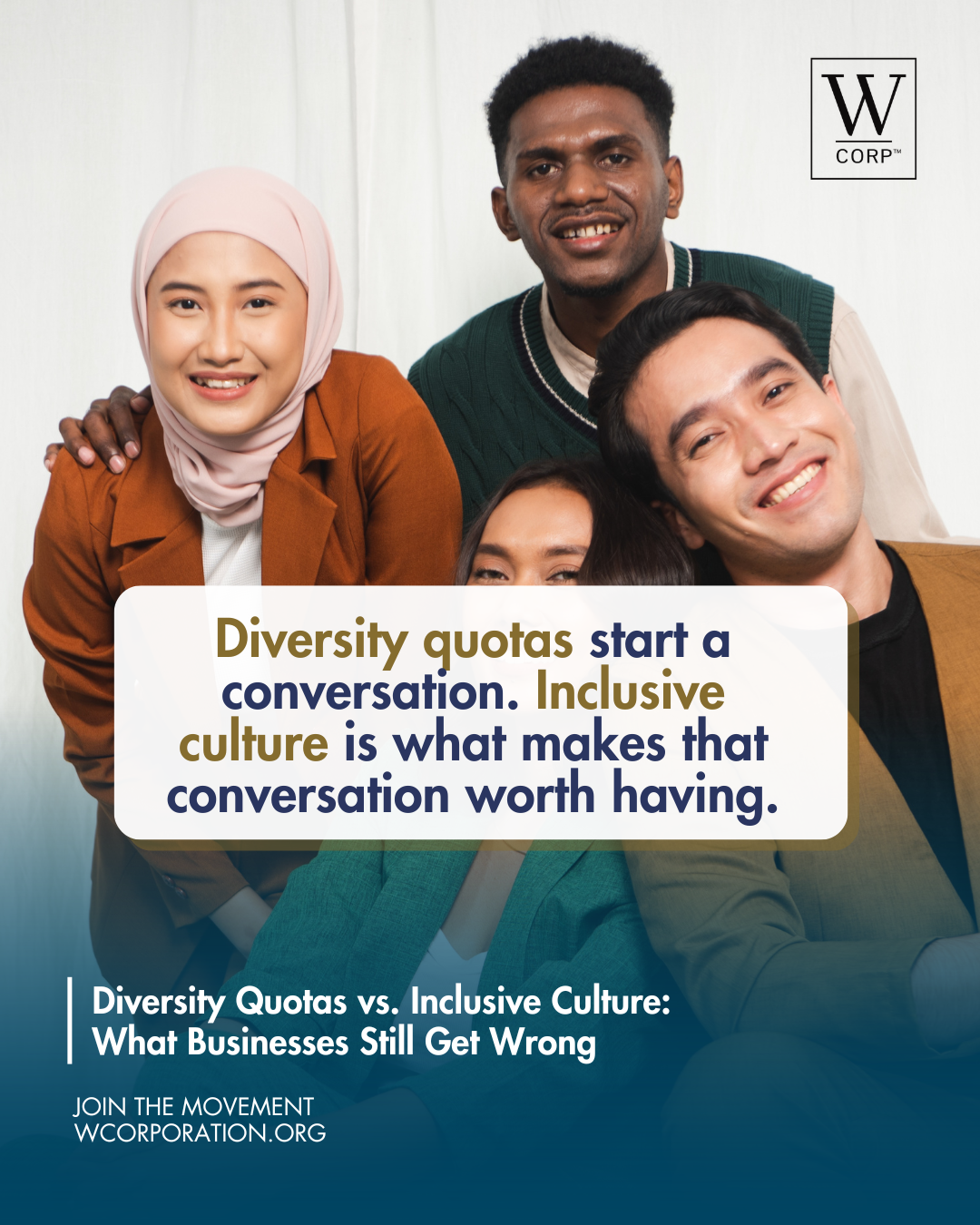
Diversity quotas start a conversation. Inclusive culture is what makes that conversation worth having.
What the Confusion Is Costing
The gap between hiring for diversity and building for inclusion has a measurable price tag, and it shows up across retention, productivity and profitability.
SHRM's State of Global Workplace Culture report found that workers in positive organisational cultures are almost four times more likely to stay with their current employer. That statistic alone should be enough to move culture up every board agenda. It rarely does.
HiBob's 2025 research into UK women professionals found that in 2024, only 19.45% of women received a promotion compared to 25% of men, and women are more likely than men to leave their jobs due to limited career progression rather than pay. When women cannot see a path forward, they do not stay. And the cost of losing them is far higher than the cost of keeping them.
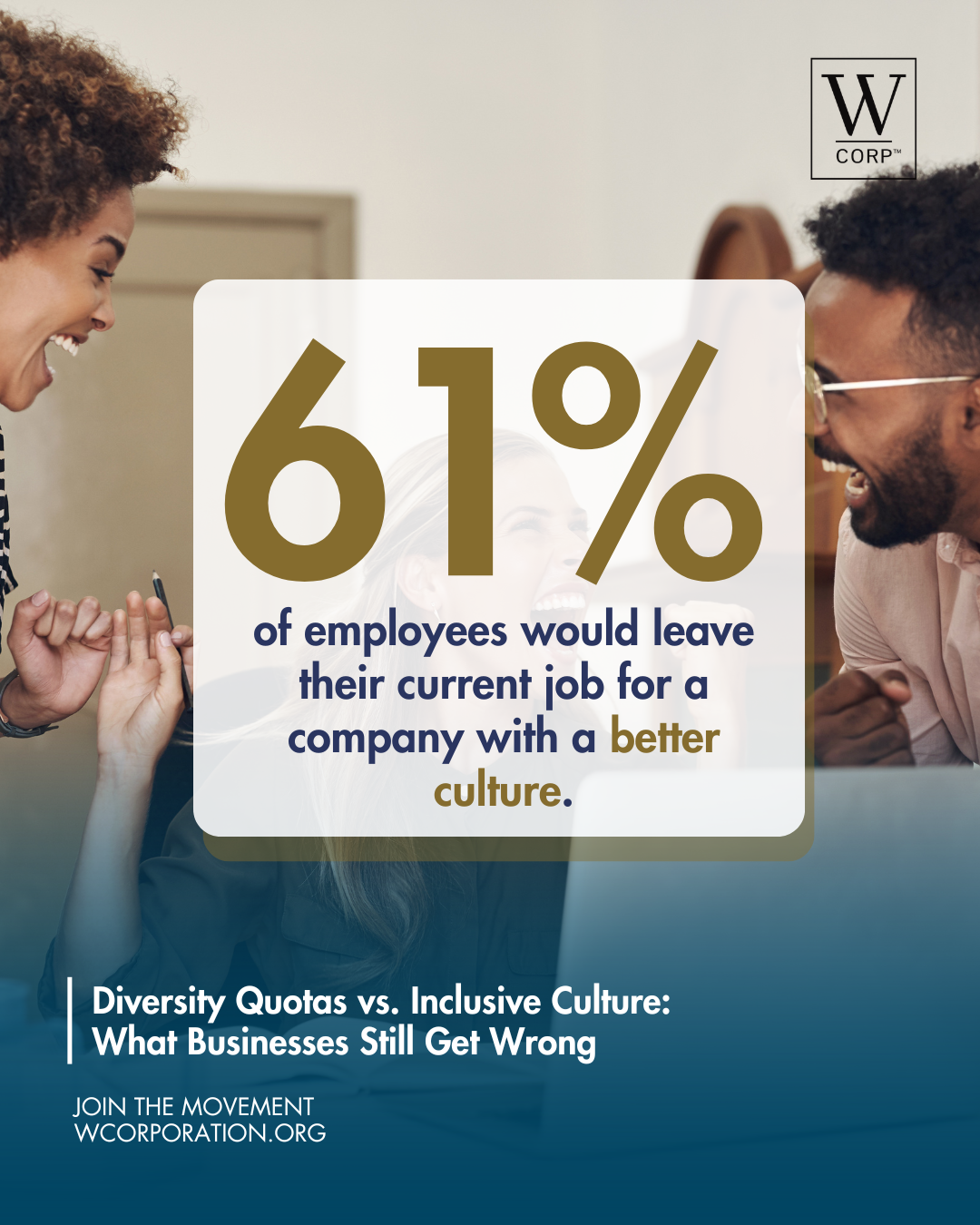
Built In's 2024 Culture Report found that 61% of employees would leave their current job for a company with a better culture. Organisations placing women into roles without changing the culture around them are not solving the problem. They are repackaging it.
The Difference Between a Target and a Culture
Diversity quotas operate at the level of numbers. Inclusive culture operates at the level of daily experience. The two are not interchangeable, and treating them as if they are is the central mistake most businesses make.
Genuine inclusivity means women can bring their full biology to work. Maternity, perimenopause, menopause, and the reality that women still carry a disproportionate share of caregiving at home. Deloitte's Women at Work 2024 research across 5,000 women in 10 countries found that nearly all women surveyed (95%) believe that requesting or utilising flexible working opportunities affects their promotion prospects. All of that has to be accommodated within working life, not treated as a personal problem employees manage on their own time.
Genuine inclusivity also means the right people are heard in meetings, not just the loudest ones. It means people feel safe enough to challenge, to disagree, and to contribute their best thinking without calculating the personal cost first. Deloitte's inclusion research found that inclusive cultures are six times more likely to be innovative and agile. Research compiled by the Niagara Institute shows that teams with high psychological safety see 76% more engagement and 27% lower turnover risk.
These are not culture metrics. They are commercial ones.
Where Organisations Keep Getting Stuck
Most businesses understand the headline argument for inclusion. The challenge is that they continue to treat the structural and cultural work as separate from the business performance work, funding one without the other and wondering why the returns stall.
A woman can do every piece of individual development work available to her, build her confidence, sharpen her leadership presence, clear every internal barrier she can see, and still return to a culture that questions her judgment, passes high-visibility projects to someone else, and rewards the colleague who asked for less. The beliefs come back. The investment stalls.
Deloitte's own research found that only 50% of workers say their managers create psychological safety on their teams. That means half of all workplaces are operating with a structural ceiling that no amount of individual effort will shift. The structural conditions have to keep pace with the individual development, or the whole investment leaks.
What Genuinely Inclusive Cultures Produce
The organisations that get this right see returns across the whole business, not just in their diversity reports.
Staff retention improves significantly. CIPD data cited in Stribe's 2026 UK retention research puts the average employee turnover rate for UK workers at 35%, meaning more than one third of UK employees leave their jobs each year. Businesses that build genuinely inclusive cultures hold on to talent that others keep losing, and that compounding retention advantage is one of the most undervalued financial assets in any people strategy.
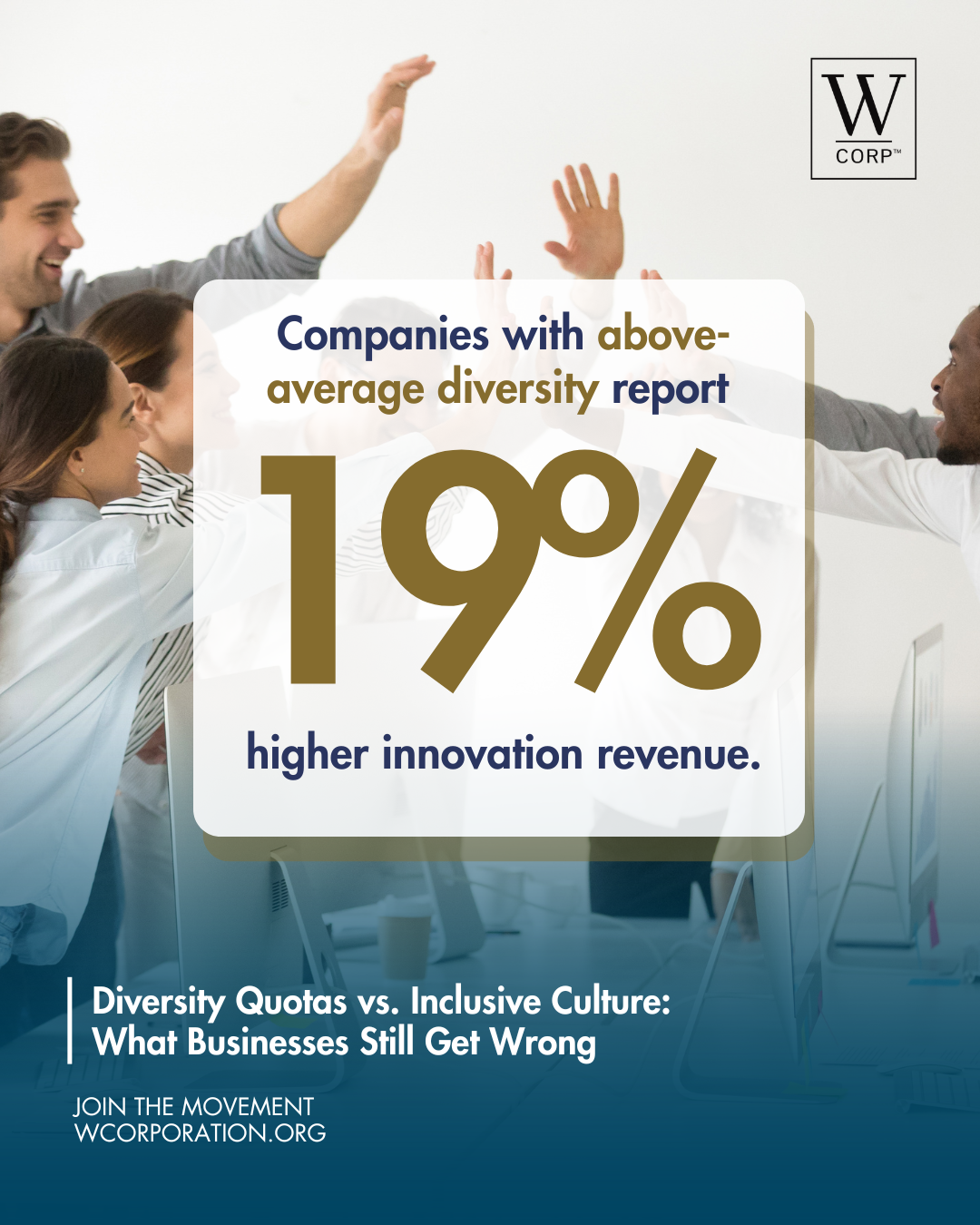
Innovation increases when people feel safe enough to speak. BCG research found that companies with above-average diversity on their management teams reported 19% higher innovation revenue than those below average. Loyalty deepens when people feel seen and heard. Women's promotion rates dropped from 87 per 100 men in 2023 to just 81 in 2025, according to workplace diversity research published by Doit Software. The talent pipeline is thinning, not because the talent is not there, but because the culture is not holding it.
What Leaders Can Build Right Now
Build systems, not just statements. Flexible metrics, accessible promotion criteria, and meeting structures that ensure all voices are heard are not perks. They are the infrastructure of a high-performing culture.
Accommodate biology as standard. Maternity, menopause and caregiving responsibilities are not edge cases. They are the reality of a significant portion of your workforce. Organisations that build policies around that reality retain people that others lose.
Track where inclusion breaks down. Consistent patterns of women not progressing, not being heard, or not applying for senior roles are culture signals. Treat them as performance data.
Measure culture the way you measure revenue. What gets tracked gets managed. Organisations that build inclusion into their performance metrics are the ones that sustain it.
Diversity quotas open a door. What happens on the other side of that door is determined entirely by the culture waiting there. The organisations that build that culture deliberately will not need to debate targets. Their results will speak for them.


